When a customer asks ChatGPT or Google's AI Mode a question that involves your business, the engine does not search that question. It rewrites the question into several smaller searches, runs them all at once, reads the pages that come back, and writes one answer that names a handful of sources. Google calls this technique query fan-out. It means your website is being judged against searches you have never seen and do not track, and it explains the strangest fact in AI search today: most of the pages AI cites do not rank in the visible top ten.
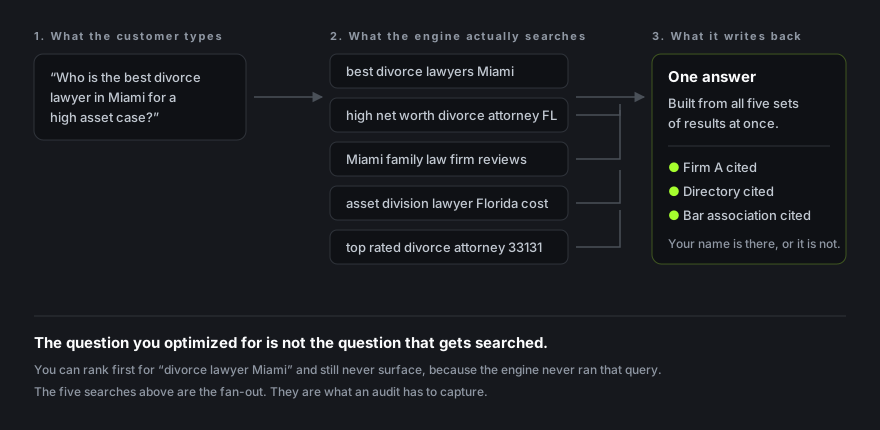
Fan-out in plain terms
Say a homeowner asks an assistant, "who should I call about a leaking water heater in Mesa, is it worth repairing a 9 year old unit?" No search engine gets that sentence. The assistant might quietly run searches like these instead:
- water heater lifespan repair vs replace
- water heater leaking from bottom causes
- best plumbers Mesa AZ water heater
- water heater replacement cost 2026
Each search pulls back its own set of pages. The assistant reads the visible text of the ones it picks, composes a single answer, and cites two or three of them. The plumber who gets named is whichever one had strong pages in that pool.
This is not our theory of how it works. Google described it themselves when launching AI Mode: it works by "breaking down your question into subtopics and issuing a multitude of queries" on the searcher's behalf. ChatGPT and Perplexity behave the same way, each with its own rewriting habits and its own underlying search index.
Your customer asks one question. The engine runs searches you have never seen, and the answer is decided there.
Why this broke the old scoreboard
For twenty years the game was to rank for the query a human typed. Fan-out quietly replaced that query with a cluster of machine-written ones, and the data shows how much that changed who wins.
Ahrefs measured this across 863,000 keyword searches and 4 million cited URLs. A third of the pages Google's AI cites are invisible on the results page a human would see. They are not ranking for the question. They are ranking for one of the searches the machine generated from it.
Want to see the queries an assistant writes about your business before it answers? Those are the first page of the free audit.
Get my free auditWhat this means if you own a business
Three practical consequences fall out of this.
1. Your rank report is measuring the wrong thing
You can hold position one for "accountant in Scottsdale" and still be absent from AI answers, because the engine asked eight adjacent questions and your competitors' pages answered them. The keyword tools you pay for track the human query, and the human query is no longer where the decision happens.
2. Specific pages beat impressive homepages
Fan-out searches are narrow. A page that squarely answers "water heater repair vs replace" can get pulled into an answer that a beautiful, general homepage never enters. Depth of coverage across the small questions in your niche is what fills the pool the assistant picks from.
3. You cannot fix what you have not observed
The fan-out queries are real and specific, and they differ by engine. Part of our audit work is observing which searches the engines actually run for the buying questions in your market, and which pages they read when they do. Once you can see the real query surface, content stops being guesswork. What you do with that list is ordinary SEO, which is why normal SEO is still the best AI visibility investment.
One caution
Being read by the engine and being named in the answer are different hurdles. Fan-out determines which pages get read. Whether a page that gets read earns a citation depends on what is on it. That gap has its own article: retrieved vs cited, the diagnosis nobody gives you.
See the searches AI runs on your market
Our free audit shows who the assistants name for your buyers' questions today, and where you sit in the pool they pick from.
Get my free auditSources
- Google, "AI in Search: Going beyond information to intelligence" (May 2025): blog.google
- Ahrefs, "38% of AI Overview Citations Pull From The Top 10" (March 2026): ahrefs.com/blog/ai-overview-citations-top-10
- Search Engine Journal, "Google AI Overview Citations From Top-Ranking Pages Drop Sharply": searchenginejournal.com